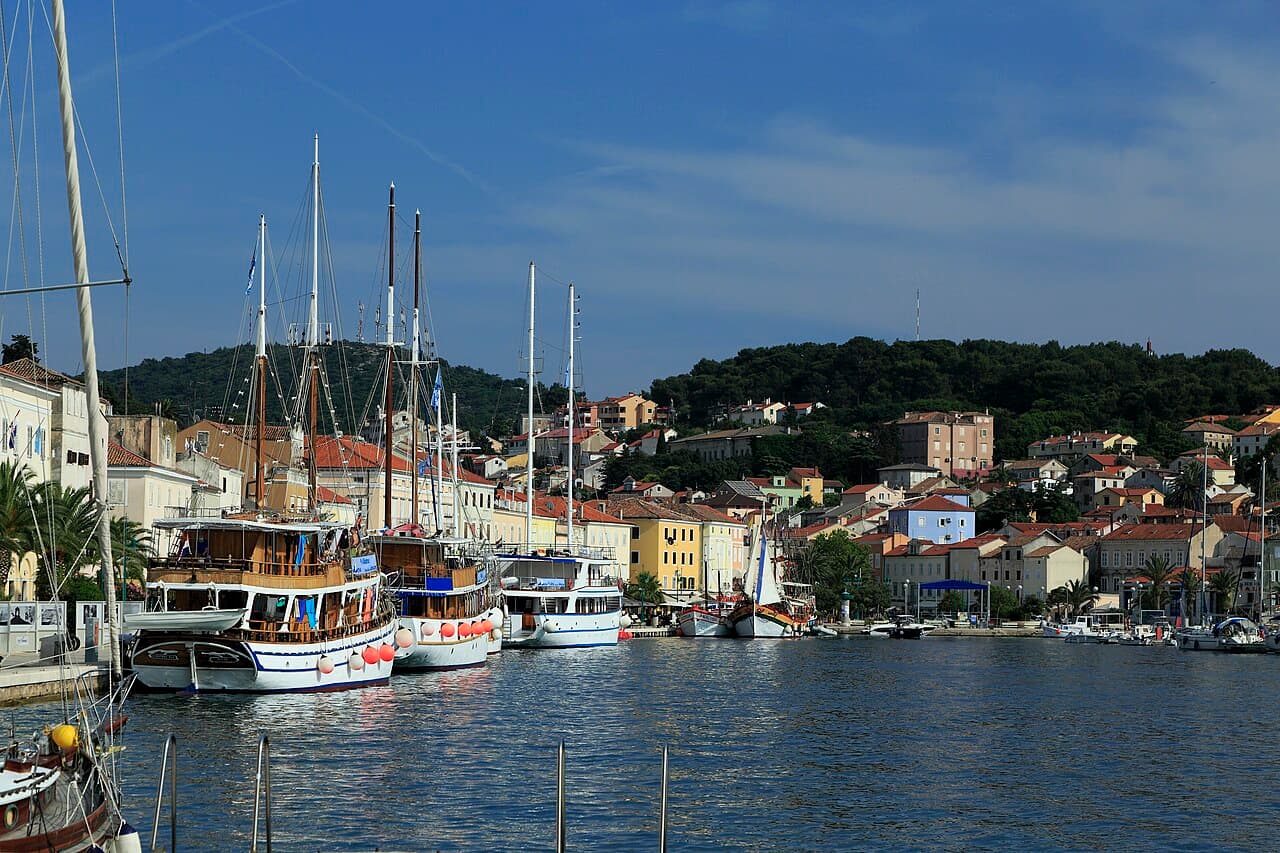
01Is the Lošinj Boat Day Trip Worth It?
For most summer visitors, yes. The standard excursion from Mali Lošinj runs about 7 hours (10:00 to 17:00) and costs around €60 per person with lunch and drinks. A typical Susak itinerary reaches the island around 11:00, leaves time for swimming and the village, then has lunch. In the afternoon it goes on to the Srakane islets for snorkelling, then returns. An Ilovik version adds a snorkelling stop in Balvanida bay, then a cave and cliff-jumping stop near Sv. Petar and a swim at Orjule.
The price is fair. Lunch and drinks are included, and a 5 HP rental boat alone costs €100–150 per day before fuel. The season runs roughly from April to the end of October.
02What You Get at Each Destination
Susak
Susak is a small, sandy, car-free island. It has a protected village, shallow sandy beaches, and a very quiet pace. It is a different landscape from the rocky, pine-lined coast of Lošinj itself, and that contrast is the main reason to go.
Ilovik and the Orjule/Oruda area
Ilovik is known for its gardens and flowers and has a handful of waterfront restaurants. The surrounding islets are better for swimming and snorkelling than for sightseeing.
Dolphin watching from Veli Lošinj
About 180 bottlenose dolphins live in the Lošinj-Cres waters. Tours with the Blue World Institute cost about €55–60 per adult and last up to 3 hours. The operator offers a free repeat trip if no dolphins are seen, but some visitors say this is only mentioned briefly. Ask about it when booking. The tours are not suitable for pregnant women, wheelchair users, or people prone to seasickness.
03Ferry or Organised Tour?
A public ferry costs only about €2.50–5.00 each way, but it does not work as a day trip. Departures from Mali Lošinj are early morning (05:30 and 06:00) and early afternoon (13:30). Return sailings from Susak leave at 08:10, 14:30 and 17:35. The slow passenger ferry can take up to 2h 35m, while the catamaran takes about 35 minutes. Timetables change seasonally, so check Jadrolinija before planning.
Sailing at 06:00 and returning at 17:35 gives a long island day for under €6 in fares, but with nothing arranged for food, shade or swimming spots. The organised tour wins on convenience and on the Srakane stop, which the ferry cannot give you.
04Honest Verdict
The tour is worth it if the weather is good and you want swimming, a long lunch and two or three stops without planning. It is poor value on a windy day. A rough Kvarner sea turns a relaxed cruise into a long bumpy ride.
The dolphin trip is the weaker choice for a first-time visitor. Sightings are likely but not a certainty, and you are paying €55–60 for a boat ride and a short commentary. Treat it as an add-on to a conservation-minded visit, not as the main attraction of the trip. Many visitors rate the exhibition in Veli Lošinj as an average stop, and it costs only a few euros.
05Who Should Skip It
- People prone to seasickness. Open crossings between the islands can be rough, and dolphin boats are fast.
- Visitors with only one full day on Lošinj. Spend it on Mali Lošinj, the Apoxyomenos museum (about €12) and the coastal path to Veli Lošinj.
- Travellers who dislike group schedules. Up to 30 people share the boat and the timetable is fixed.
- Anyone visiting in off-season. Boat excursions run from April to October, and sailings are limited in winter.
- Visitors with limited mobility. Boarding, island paths and village steps are not easy.
06Insider Tips
- Book the tour the day before, and choose a morning departure on a calm day. Ask the skipper in the morning if wind is forecast.
- Bring water shoes. Susak and Srakane have rocky entries, and sea urchins are common.
- If lunch is not included, expect main courses on Ilovik at roughly €18, and take cash. Some operators accept only cash.
- Skip the dolphin tour and the island tour on the same day. Both are around 3 to 7 hours of boat time.
The Susak sailing from Mali Lošinj is the best-value choice, and the dolphin trip is optional. Don't pay extra for a private charter unless you are a group of six or more, when the split cost can make sense.